General Prescribing Considerations
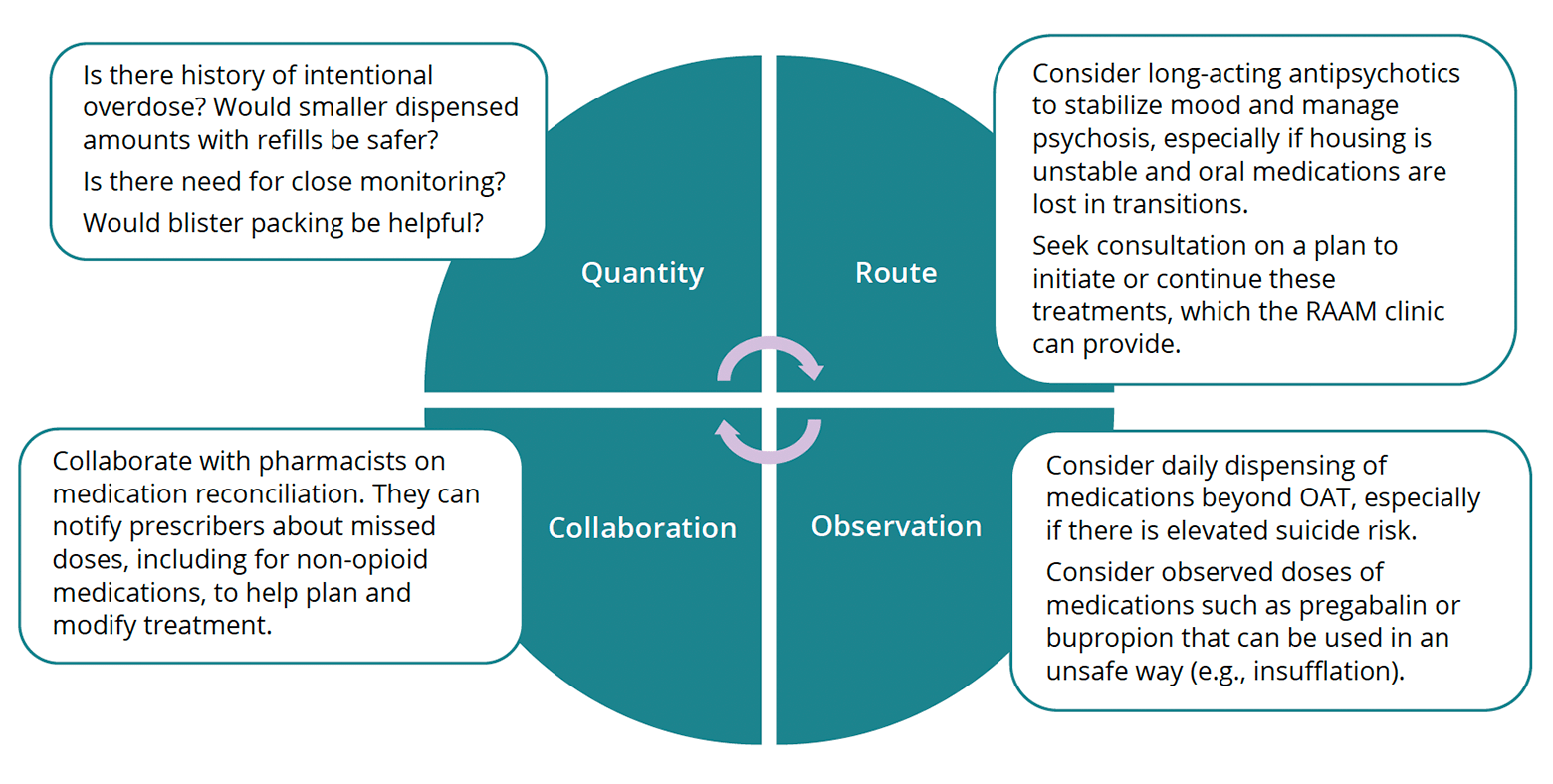 Click here for full-size image.
Medical Considerations in Prescribing Psychiatric Medication
Consider medical conditions, risk factors and drug-drug interactions when prescribing medication for mental health disorders in patients with co-occurring substance use disorders.
| Concern | Treatment considerations |
|---|---|
|
QT prolongation |
Consider QT prolongation risk and relative benefits of medications, particularly when combining high-dose methadone (>150 mg) with QT-prolonging agents such as antipsychotics or antidepressants, or when patients are in alcohol withdrawal, or use cocaine or methamphetamine. |
|
Bipolar disorder |
Avoid antidepressants or consider them only after comprehensive psychiatric assessment because they can precipitate mania in bipolar disorder. Mood-stabilizing medications such as valproate or lithium require careful monitoring and psychiatric assessment. |
|
Renal function |
Adjust doses of medications such as lithium and pregabalin in patients with renal impairment because they undergo renal clearance. |
|
Hepatic function |
Remember that certain medications (e.g., duloxetine, valproate) undergo hepatic metabolism and are contraindicated in hepatic impairment or require dose adjustment (e.g., fluoxetine). |
|
Drug-drug interactions |
Work with the pharmacy team/pharmacist to identify drug interactions, including those related to cytochrome P450 enzyme inhibition or induction (e.g., vortioxetine, bupropion). |
|
Metabolic monitoring |
Monitor for metabolic side effects in patients on antipsychotic medications for any indication (e.g., psychosis, mood augmentation). Manage cardiometabolic risks. |
|
Safety assessments |
Develop a safety plan because patients with mental health and substance use disorders are at risk of self-harm, harm to others and reduced self-care. The plan should include reducing the patient’s access to means such as medications that have overdose potential. |
|
Neurocognitive disorders |
Recognize that patients may have neurocognitive disorders (dementia) due to use of substances such as alcohol, or they may have other concurrent disorders (traumatic brain injuries, cardiovascular disorders). |
|
Seizure history |
Do not use bupropion in patients with elevated risk of seizures (significant alcohol use, sedative or hypnotic use disorder/withdrawal, history of seizures such as from fentanyl). |
|
Pregnancy |
Ensure informed consent in discussions about psychopharmacology in pregnancy. Risks of treatment versus risks of untreated mental health disorder must be carefully considered. |
|
Polypharmacy |
Conduct medication reconciliation and ensure strong communication with primary care providers and other prescribers. Polypharmacy can lead to serotonin syndrome with many classes of medications (SSRIs, opioids, TCAs). |
Treatment of Concurrent Disorders and Stimulant Use Disorder in RAAM Clinics, Outpatient Settings and Bed-Based Programs © 2025 Centre for Addiction and Mental Health.