April 2026
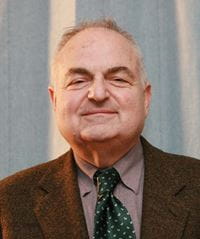
On this episode of Quick Takes, Dr. David Gratzer sat down with Dr. Joel Paris, former editor-in-chief of the Canadian Journal of Psychiatry, chair of the Department of Psychiatry at McGill University, and self-proclaimed skeptic.
In this episode, Dr. Paris:
- Critiques the DSM and ICD diagnostic systems
- Challenges serotonin-based explanations for depression
- Expresses skepticism toward both psychotherapy and biological psychiatry
- Argues that adult ADHD, autism, and trauma are over diagnosed
- Suggests that CBT is overmarketed
- And shares several other controversial opinions
Related links and resources: Book by Dr. Joel Paris
or download the PDF of the transcript.
April 2026
Episode 43: A skeptic’s view of psychiatry: An interview with Dr. Joel Paris
Running time: 23:26
[Musical intro]
David Gratzer: What happens when you spend five decades practising psychiatry and you've seen some 30,000 patients? When you've held major roles in the field, like editor in chief of the Canadian Journal of Psychiatry and chair of the Department of Psychiatry at McGill University? When you've penned more than 30 books and hundreds of papers?
Well, in the case of Doctor Joel Paris, you might become a little bit skeptical. As he notes in one of his many books, quote: "Over time, my perspective on psychiatry has changed in the direction of greater skepticism." Skepticism? Yes, but there's also a lot of realism. And let's not forget about hope for a better future. Welcome to Quick Takes. My name Doctor David Gratzer. I'm a psychiatrist here at CAMH. This is a podcast by physicians for physicians. And today we're talking to that skeptic, Doctor Joel Paris. Welcome, Doctor Paris.
Joel Paris: Thank you for inviting me.
David Gratzer: Doctor Paris, you've been a busy guy clinically and in terms of research, and your career has spanned literally decades. What's changed the most in your thinking about psychiatry?
Joel Paris: Well, I was trained in the late 60s, early 70s. And at that time there were really two psychiatries. But because I trained mostly in places where psychotherapy was the basis of thinking about patients, I was psychodynamically oriented for many years, and I became very skeptical about it. I even wrote books saying why it's wrong and misguided but on the other hand, I'm also skeptical about a reductionistic biological psychiatry. We don't know enough about the brain. I have a book called Unanswered Questions in Psychiatry and a lot of these questions have to do with the fact that neuroscience doesn't have the answers. It's a very immature science, and we can't explain very much about psychopathology yet. So, the two psychiatries are still separate after all these years and I'm skeptical of both. But I believe in the biopsychosocial model which attempts to integrate them. Although I'm not sure we know how to do that.
David Gratzer: A pox on both those houses, it would seem. You know, one of the running jokes that learners often share is that neuroscience reduces psychiatry to be mindless psychotherapy, and psychoanalysis reduces psychiatry to be brainless. It seems after all of those years, you consider the joke still relevant.
Joel Paris: I think that was Leon Eisenberg from Harvard who had that FOMO. I think it's very hard for people to have multiple perspectives and to integrate them. We're all tempted to simplify and just look at things from one angle. But my story is that when I stopped believing in the things I was taught by my teachers 50 odd or 60 years ago, I had to find some other basis to practice psychiatry, and I became a born again, evidence-based psychiatrist. I was the first person to establish a journal club at my home hospital in McGill giving an opportunity to teach people critical thinking. And I just continued like that. But it means you've got to be able to suspend judgement and realise you don't have all the answers and that maybe, you know, they're always saying there's going to be some big breakthrough that's going to change everything in psychiatry, but I think that's next century, not soon!
David Gratzer: You believe in evidence-based psychiatry, and it's led you to make some controversial opinions known. I mean, not talking about the new book, but the last book you talked about fads and fallacies, and you go after some very specific ideas that we have. Do you think psychiatry is more prone to fads and fallacies than other areas like internal medicine?
Joel Paris: Yes, I do, I wrote a book on the DSM-5 when it came out in 2013, and people have come to believe that this actually describes psychopathology in an accurate scientific way, and it doesn't. It just lists symptoms I'm a critic of the DSM system and the ICD system isn't really all that different. The diagnoses we use are not real things. They're just ways of talking or categorising things for our convenience. I'm also critical of the expansion of diagnoses. There was a time when everybody was bipolar if they were just moody. Now the latest thing is adult ADHD, which is being terribly over diagnosed. And this has spread now even to autism. And patients like the idea of diagnosis. They can read about it on the web, and they could look at the criteria, and they get very attached to these things because it seems to give an answer to why they're unhappy and dysfunctional. But this is an illusion.
David Gratzer: Well, let's push you a bit here. I mean, you've touched on some of your thoughts over time. Let's go through some of these positions. And of course, you've written so prolifically and so thoughtfully. ADHD. So perhaps there's been an historic underappreciation that adults can have attentional problems. Why do you object to the diagnosis of adult ADHD?
Joel Paris: Because we don't even know what ADHD is in children. Not to speak of adults. I mean, we don't have a good model of it. We have no biomarkers in psychiatry, almost none, which makes us quite different from internal medicine that way. Uh, it's just a collection of symptoms which overlap with a lot of other things like, mood problems and personality problems and all kinds of things like that. And I think people are taking stimulants as a way of doing better in school or focusing on a job. But I think we've overdone it and put too much of a high expectation on these medications. And the long-term studies that have followed patients from childhood, really don't show that it's justified to have people on stimulants for decades or maybe their whole life.
David Gratzer: Okay. Fair enough. But like you, I've spent time seeing outpatients, including in emergency departments, and sometimes people will come into the emergency department of the hospital I'm affiliated with, and they'll say that they focus better when they take a friend's Ritalin. University students in particular seem to really reach for stimulants and they suggest they get better grades. What then, is the problem of a soft diagnosis of ADHD if people feel better with it?
Joel Paris: Well, in fact, everybody feels more focused when they take stimulants. It was shown by Judith Rapoport decades ago that normal people, if they take a stimulant, can focus better. And that has nothing to do with the diagnosis. I think also people who never had attentional problems before adolescence, are probably not having the same disorder as people who have had these problems when they were children. So, it's a complicated issue. But I feel like we're looking for answers, and because we don't understand always what we're doing and what's wrong with our patients, we fall back on a magic pill.
David Gratzer: And the prescription rates of stimulants for youth, but also for adults, has exploded in recent years. Do you think ultimately that's going to haunt us as a society in terms of individual patients?
Joel Paris: We also don't know if there are long term costs to taking stimulants for many, many years. There is some soft evidence suggesting that there might be cardiovascular side effects in middle age. If people take stimulants for 20 years. I'm not going to rely on that because we haven't done the follow up studies just to show that whether that's true or not.
David Gratzer: But it is a relatively modern phenomenon that people are flocking to a diagnosis. I mean, particularly university and post-secondary students and ADHD. There's also a phenomenon of people feeling that they have autism. I kind of get the ADHD diagnosis in that it lends itself to a treatment. And the treatment, as you suggest, is certainly non-specific and it might be helpful but non-specific. But autism doesn't really have a treatment. Why would people then want that diagnosis, do you think?
Joel Paris: That's what I'm trying to figure out. It doesn't make any sense. Who would want to have autism? Nancy Andreasen once said that the only diagnosis in psychiatry that people actually want to have is PTSD. And that's because, uh, they get all kinds of goodies or different particular kinds of care if they were given that diagnosis. And so, if on top of having a little a little better focus, like wearing eyeglasses, if on top of that, you're taking stimulants, you're going to focus a little bit better, but it's, it's not as dramatic a thing because there's a big placebo effect.
David Gratzer: You bring up PTSD, which lends itself to the larger question of trauma. And you've written extensively about trauma. Do you think trauma is over diagnosed or an overused term?
Joel Paris: Absolutely. Every time they revise the DSM, they make it easier to meet the diagnostic criteria. And there's also this idea of "the drama of trauma" and also the simple explanation. You know that childhood trauma is the cause of personality disorders, mood disorders, all kinds of things. We don't really have the evidence to support this kind of thinking. It's a bit of a fad, PTSD, even though there obviously is such a thing, but most people who are exposed to serious trauma don't develop PTSD. It's an average 5 to 10% of those exposed will develop these symptoms. And that means the vast majority don't get them. And the worst one is rape. But even that is only 20% of those exposed to a rape. And combat in war is a little bit below that level. But most soldiers don't develop PTSD either. People like to quote H.L. Mencken an American journalist who said: "for every complex problem, there's a simple solution that's wrong."
David Gratzer: I mean, trauma is something that so many people talk about. But yeah, there's a difference. I mean, I remember a patient who came in and was really destroyed by a car accident mentally, not physically, whereas his elderly mother, who in fact did have some physical problems secondary to the car accident, really walked away and never thought about it much after. Why is it that the 20% say would be affected, or people like my patient, but others not so?
Joel Paris: This is about resilience. It's also about personality traits. People with high neuroticism. This was shown in Australian researchers decades ago that if you have a high score on self-report measures of neuroticism, you're going to be at risk for all kinds of psychiatric disorders, of which PTSD is perhaps the most important.
David Gratzer: There is complexity here. Do you think our field simplifies too much?
Joel Paris: We try. But we're talking about the most complicated thing in the entire universe, the human brain. So how do you simplify something like that?
David Gratzer: So, we've talked about a few controversial views that you have around ADHD and trauma. What about the serotonin hypothesis? Many of our colleagues talk much about serotonin. Some of the biggest critics of psychiatry criticize that hypothesis. You found yourself in one camp, not the other, eh?
Joel Paris: I like Joanna Moncrieff. And this article that came out, I think it was 3 or 4 years ago, about why the serotonin is not even necessarily abnormal in depression. And there was a meta-analysis from Stefan Leucht in Germany some years ago, which I found very impressive. He found that the effectiveness of psychiatric treatment is on the same level as that of internal medicine, even though they've got better, more advanced science than we do. We help most of our patients, but the question is, how do we help them? Knowing how to relate to people, providing understanding and comfort, the basic elements of good psychotherapy. And how much of that is specific effects of drugs. Now, I am old enough to have lived through the time when antipsychotic drugs and antidepressants were new and being just brought in the late 1950s. And I saw the mental hospital before that happened and before everybody was sent home, for better or for worse. But I'm not like these critics who say we shouldn't be prescribing drugs at all. That's ridiculous. Of course, it's one of our tools, but the idea that that this is all related to one neurotransmitter is not supported by good evidence.
David Gratzer: Fair enough. Moncrieff, by the way, might disagree with some of what you're saying about prescribing, but we'll set that aside. But does it really matter that much? I mean, at the end of the day, if our treatments are effective do our explanations need to be that sharp?
Joel Paris: If we still had the drugs that we had in 1970s around the time when haloperidol came in and had some advantages over more sedating neuroleptic drugs. If all we had is what we had 50 years ago, we could probably do just as well. I haven't seen a lot of progress in neuroscience that would lead us to more specific treatments than we, than we had before.
David Gratzer: If you're not so persuaded that the meds are better. Surely you think the psychotherapies have evolved greatly over time?
Joel Paris: No. Not really. I mean, I was very involved in introducing dialectical behaviour therapy to our clinics in Montreal for patients with borderline personality disorder. I set up clinics where patients were treated in a few months and people didn't believe it at first, except that we had data to support it. Most of the patients of the personality disorder patients can be treated without medication.
David Gratzer: Can be treated without medications, and as your own data suggests, over short periods. Right? I think your argument was that something like BPD is actually a spectrum disorder. And so, some people could do much better with a handful of sessions of DBT rather than the full exhausting…
Joel Paris: Yeah, yeah. You see, there's something about psychotherapy which is addictive. I mean, who wouldn't like to have somebody to listen to you and, validate you on a regular basis?
David Gratzer: Right.
David Gratzer: But, but for sure, evidence is growing better.
Joel Paris: I think the biggest change in psychiatry is that it is much more evidence based even than it used to be. It used to be people would just talk about their clinical experience or a series of cases they'd seen and, try to draw general conclusions from that. I think we're more humble and we should be.
David Gratzer: Are you hopeful about the future?
Joel Paris: Yes, yes. But I think we have to be patient. I won't live to see these great breakthroughs that we're always being promised. Or as David Goldbloom [says], "the breakthrough is just around the corner, and it just stays there."
David Gratzer: Um, it's a good observation. I mean, do you think that maybe it's also true because the brain is infinitely complex, and therefore, no matter how much we spend on neuroscience research, we won't get that much out of it.
Joel Paris: Well, we will eventually, but we're talking about another 50 years and none of us will be around to see that day.
David Gratzer: Well, you'll quote Goldbloom. I'll quote Keynes: "in the long run, we're all dead." I mean, how realistic is it that we have these biomarkers and these breakthroughs, do you think?
Joel Paris: I think it's realistic, but it's not going to be one neurotransmitter or one gene or set of genes. It's going to be interactions between many risk factors. Many resilience factors. It's something which is going to be very complicated. Maybe we need a computer to help us understand it.
David Gratzer: You're in your mid 80s and you're touting the benefits of AI?
Joel Paris: I think it's too soon to tell. But I think when you have a complicated problem, you're not going to get a simple solution.
David Gratzer: And on a pivot, I mean, we've criticized neuroscience and you've criticized psychotherapy. But returning back to psychotherapy, do you think some of the simplicity has grown contagious that something like CBT has become, frankly more than just a useful therapy, but an overmarketed useful therapy?
Joel Paris: It is. It's definitely overmarketed because the evidence fails to show that it's superior to all its competitors. What's good about CBT is it's structures you and tells you how to handle many difficult situations. And that's why it's popular. But you know, psychotherapy has a way of going on for too long and CBT has not escaped that problem.
David Gratzer: You're a pretty skeptical guy.
Joel Paris: I always was, but I wasn't sure I was right.
David Gratzer: On the other hand, you're somebody who absolutely loves psychiatry. I mean, even in retirement, you're still thinking and writing about psychiatry.
Joel Paris: Yeah. I have two new books coming out in early 2026.
David Gratzer: And you've mentioned one of the books. What's the other book about?
Joel Paris: One of the books is about personality and how to apply personality traits to understand complex cases, not just personality disorders, but many psychiatric presentations. The other one, which is the one about unanswered questions in psychiatry, covers a lot of the ground we've been talking about today. And I've actually started another book, but I don't know if I'll finish it. It's going to be called Social Contagion in Psychiatry.
David Gratzer: Which you've written about, including with things like self-harm that in fact...
Joel Paris: Self-harm. For sure. Anorexia nervosa, all kinds of things, have an element of social contagion.
David Gratzer: Do you think social media has made these phenomena worse?
Joel Paris: Probably. But it's, controversial because again, it's like trauma. Most people who spend hours every day on social media don't get sick because of it. There are people who are vulnerable, high in neuroticism, more easily upset, more easily derailed. And, and these are the ones who may be hurt by social media.
David Gratzer: What advice would you give to young psychiatrists or residents of psychiatry today?
Joel Paris: Psychiatry is one of the most fascinating things in the world. And if you're not too grandiose in your goals, you're going to enjoy doing this kind of work. It's fun.
David Gratzer: Do you have any regrets in terms of going into psychiatry?
Joel Paris: None at all. It fits me like a glove.
David Gratzer: It's been a pleasure talking to you today. Let me just close with one last question. What makes you the most hopeful about psychiatry?
Joel Paris: I think because psychiatry is so interesting, it attracts people who are deep thinkers and not necessarily people who think they have all the answers. You have to be able to tolerate ambiguity and embrace complexity.
David Gratzer: Doctor Paris, I always enjoy our conversations and I've enjoyed this conversation.
Joel Paris: Thank you very much for inviting me.
David Gratzer: Thank you very much for your time.
[Outro:] Quick Takes is a production of the Center for Addiction and Mental Health. You can find links to the relevant content mentioned in the show and accessible transcripts of all the episodes we produce online at CAMH.ca/professionals/podcasts.
If you like what we’re doing here, please subscribe.
Until next time.